

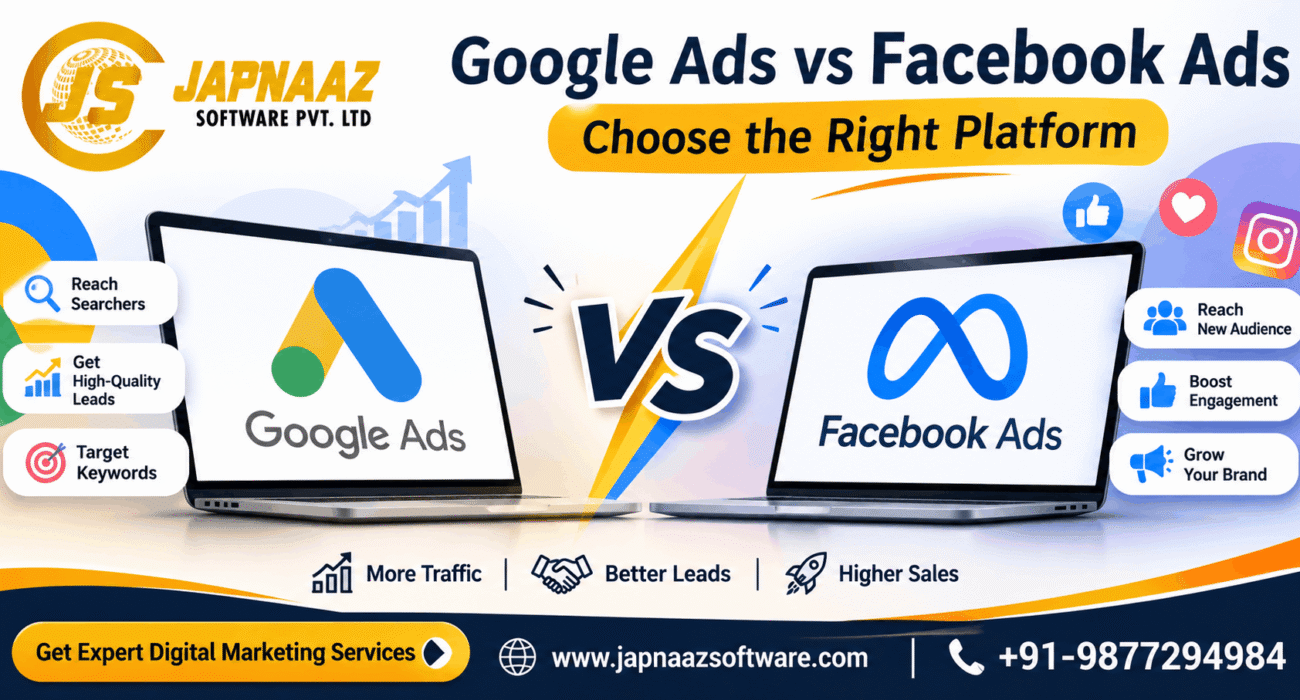
In today’s competitive digital world, businesses need effective ways to reach potential customers, increase brand awareness, and generate sales. Online advertising has become one of the most powerful tools for achieving these goals. Two of the most popular advertising platforms are Google Ads and Facebook Ads, but choosing the right one can sometimes be confusing.
Understanding Google Ads vs Facebook Ads can help businesses make better marketing decisions, spend their advertising budgets wisely, and achieve stronger results. Although both platforms offer excellent opportunities, they work differently and are suitable for different marketing objectives.
What Are Google Ads?
Google Ads is an online advertising platform that allows businesses to display advertisements across Google Search, YouTube, websites, Google Maps, and other partner platforms. It helps businesses connect with people who are actively searching for specific products, services, or solutions.
For example, if someone searches for “website development services near me,” a business running Google Search Ads can appear at the top of the search results. This makes Google Ads particularly useful for reaching customers who already have an interest in purchasing something.
Businesses can use different campaign types, including Search Ads, Display Ads, Shopping Ads, YouTube Ads, and Performance Max campaigns.
Benefits of Google Ads
- Reach customers actively searching for your services.
- Generate high-intent leads and enquiries.
- Target specific locations, keywords, and audiences.
- Track clicks, conversions, calls, and sales.
- Control your advertising budget.
- Display ads across Google’s advertising network.
Google Ads can be especially effective for service-based businesses, e-commerce stores, local businesses, and companies offering products or services that people regularly search for online.
What Are Facebook Ads?
Facebook Ads is part of Meta’s advertising platform, which allows businesses to promote their products and services across Facebook, Instagram, Messenger, and other Meta placements.
Unlike Google Search Ads, Facebook Ads generally focuses on reaching people based on their interests, behaviours, demographics, location, and online activity. Businesses can introduce their products to people who may not be actively searching for them but could become interested.
For example, a business selling customised gifts can show attractive product images and videos to people interested in birthdays, weddings, celebrations, and gifting.
Benefits of Facebook Ads
- Reach new audiences and potential customers.
- Promote products through images, videos, and Reels.
- Target customers based on interests and behaviours.
- Build brand awareness and engagement.
- Retarget previous website visitors.
- Generate leads through instant forms and messaging.
Facebook Ads is particularly useful for businesses that rely on visual content, impulse purchases, brand awareness, and audience engagement.
Google Ads vs Facebook Ads: Key Differences
The biggest difference between these platforms is how they reach customers. Google Ads connects businesses with people actively searching for solutions, while Facebook Ads introduces products and services to people who may be interested in them.
Google Ads is generally focused on search intent, whereas Facebook Ads is focused on audience discovery and interest-based targeting.
Google Ads can generate enquiries from people who are ready to make a purchase. Facebook Ads can help businesses attract new customers, build interest, and encourage people to explore their offerings.
Both platforms provide targeting options, analytics, retargeting, and campaign optimisation features. The right choice depends on the business, its audience, advertising budget, and marketing goals.
Which Platform Is Better for Lead Generation?
For businesses offering services such as website development, SEO, software development, consulting, or home services, Google Ads can be an excellent lead-generation option.
People searching for specific services often have an immediate requirement. By targeting relevant search keywords, businesses can connect with potential customers at the right time.
Facebook Ads can also generate leads through instant lead forms, WhatsApp campaigns, and engaging creatives. It is useful for businesses that want to reach a larger audience and generate enquiries without depending entirely on search traffic.
When comparing Google Ads vs Facebook Ads for lead generation, Google may be better for capturing existing demand, while Facebook can be useful for creating new demand and reaching potential customers who have not started searching yet.
Which Platform Is More Affordable?
Advertising costs vary depending on the industry, competition, audience, location, campaign quality, and bidding strategy. Neither platform is automatically cheaper for every business.
Google Ads can have higher costs per click in competitive industries because businesses compete for valuable search keywords. However, a well-optimised campaign can generate qualified leads and valuable customers.
Facebook Ads may offer affordable reach and impressions, making it useful for brand awareness and audience testing. However, inexpensive clicks do not always mean better sales or higher-quality leads.
Businesses should focus on cost per lead, conversion rate, customer acquisition cost, and return on advertising spend rather than simply comparing the cost of clicks.
When Should You Choose Google Ads?
Google Ads may be the right option when:
- Customers actively search for your products or services.
- You want to generate leads quickly.
- Your business provides professional or local services.
- You want to target specific search keywords.
- You want to reach customers with strong purchase intent.
- Your goal is to increase calls, bookings, enquiries, or sales.
For example, a plumbing company, software development agency, dental clinic, or legal service provider may benefit from Google Search Ads because potential customers often search for these services when they need them.
When Should You Choose Facebook Ads?
Facebook Ads may be a better option when:
- You want to build brand awareness.
- Your products are visually attractive.
- You want to introduce new products.
- You want to reach audiences based on interests.
- You want to promote offers, events, or seasonal products.
- You want to retarget people who previously interacted with your brand.
Businesses selling clothing, food, beauty products, gifts, lifestyle products, and event services can benefit from creative advertising on Facebook and Instagram.
Can Businesses Use Both Platforms?
Yes, using both platforms can be an effective digital marketing strategy. Instead of choosing only one, businesses can combine Google Ads and Facebook Ads to reach customers at different stages of the buying journey.
Google Ads can capture customers who are actively searching for products or services. Facebook Ads can introduce your brand to new audiences, build interest, and bring previous website visitors back through retargeting campaigns.
For example, a business can run Google Search Ads to generate enquiries while using Facebook and Instagram Ads to promote its services through videos, customer testimonials, and promotional offers.
This combination can help businesses improve visibility, reach more potential customers, and create a stronger advertising strategy.
Final Thoughts
Choosing between Google Ads and Facebook Ads depends on your business objectives, target audience, products, services, and budget. Google Ads is often effective for capturing high-intent customers, while Facebook Ads is valuable for brand awareness, audience discovery, and visual promotion.
Understanding Google Ads vs Facebook Ads allows businesses to make informed decisions instead of spending money without a clear strategy. Both platforms can deliver valuable results when campaigns are properly planned, targeted, monitored, and optimised.
Businesses looking to improve their online advertising performance can work with Japnaaz Software to develop digital marketing strategies that focus on generating quality leads, increasing visibility, and supporting long-term business growth.